Navigating the Summer Slump as a Freelancer

Summer feels like the world is on hold, but the silence isn't a verdict.
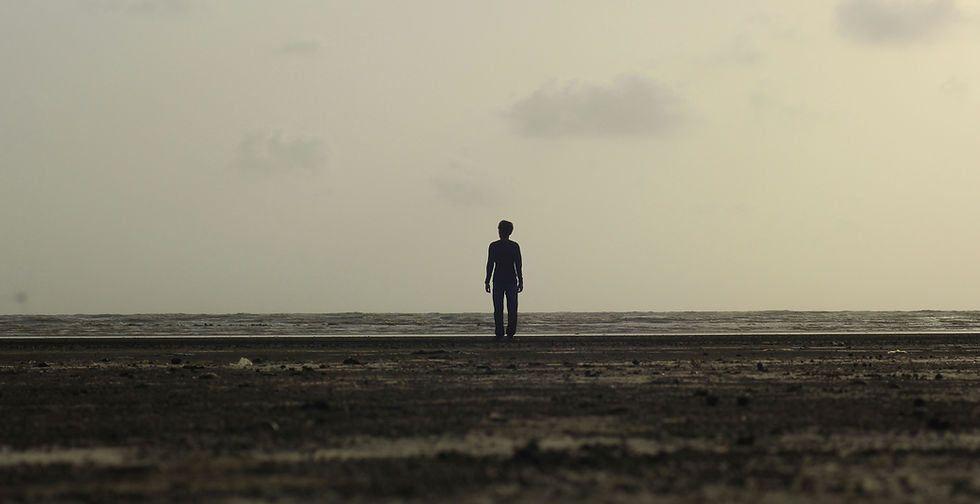
Somewhere around the second week of July, the rest of the world exhales. Offices empty out. Out-of-office replies multiply, cheerful and vague, promising to “circle back” after the tan lines fade. Barbecues replace meetings. The day’s quest shifts from inbox zero to finding a movie theater cold enough to justify the ticket price.
Despite everything — the heatwaves, the wildfires, and the general sense that summer isn’t quite what it used to be — the season still holds cultural weight. Summer is a time to slow down, rest, and be forgiven for not answering right away.
And then there’s the freelancer, sitting in the middle of all that stillness, quietly convinced it’s the end of the world. That anxious, unsettled feeling is surprisingly common. Almost every freelancer will, at some point, find themselves caught in the same uneasy silence, wondering if they’re the only one spiraling. But this experience is far from unique; it’s part of the job.
That’s the real awkwardness of the summer slump, to me. This time of year highlights the contrast between what everyone else is doing and what’s happening inside a freelancer’s head. On one side, the warm light invites sunscreen, lounge chairs, and the low hum of a normal life on pause. But when you’re on the other end of the spectrum, there’s a mind running worst-case simulations on repeat, treating every quiet inbox like a diagnosis.
A Slow Month, or a Countdown Clock?
For most people, July is a relief. As a freelancer, it’s something closer to a countdown. Where an employee gets to enjoy a slower pace as a reward, a freelancer experiences the same silence as a threat. So instead of relaxing, I try to fill the days with busywork that looks productive: reorganizing a desktop, tidying a portfolio, refreshing folders that didn’t need it. They look like work from the outside, but it’s really just a way to avoid sitting still.
Eventually, even that runs out. And what’s left is a specific kind of doomscrolling: gig boards, inboxes, the same three tabs refreshed on a loop. Every click that doesn’t lead to a notification starts to feel like evidence of something that my mind forces me to acknowledge. Since I base most of my worth on the amount of work I get, the absence of work feels like the verdict of a failure.
That’s when the spiral shows up. What if the clients never reach back after the break? What if that last email sounded too pushy? What if the final draft wasn’t quite what they wanted? What if they’ve decided that I cost more than I was worth?
But none of those questions revolve around facts. It’s a narrative my mind constructs from silence. Silence, unlike rejection, provides no closure: no feedback, no new gig, no new piece for the portfolio to show ongoing work. It’s simply an empty space, filled by a vivid imagination prone to a fear of failure.
In a way, July ends up being a weird reversal for me. In a moment when nothing is expected of me, I become most nervous, turning this month of warmth and relaxation into a haunting dread that would be a better fit for Halloween.
But instead of monsters, the terror comes from the complete lack of threat, which somehow makes it feel worse.
The Paradox at the Core of the Summer Slump
That paradoxical place isn’t new to me. I can trace that awkward July feeling much further back than any client relationship. There was always something uneasy, even as a kid, about the forced idea of summer relaxation. Those two months of freedom away from school always felt, beneath the relief, like a held breath, waiting for August to end, when the inevitable return to the classroom loomed, along with the typical uncertainties of the school year.
Maybe that discomfort with unstructured time never really left. Maybe that’s part of why working through the summer, even once there was no school to escape, felt more natural than resting through it. A quieter office in July has its own kind of order: a lighter workload, no line at the microwave, an illusion of control over the hours in a day.
Freelancing brings back that fear of uncertainty and turns it up to eleven. Now I’m not only worried about clients and workload, but I also have to factor in the financial side. Without steady gigs, you don’t get paid; you can’t pay rent, buy food, or cover utilities. It becomes an existential panic as you stare at your screen, heart thumping for a red dot in the inbox app, only to crumble when it turns out to be another spam message.
Freelancing promised some kind of control, and mostly delivered on it. I get to choose the work, my schedule, and adjust them according to the deadlines of the moment. But that freedom comes hand in hand with volatility, and nothing exposes that volatility like summer does. The irregular workload that’s part of the job the rest of the year gets amplified in July and August, until the very thing that made freelancing appealing — that precious sense of autonomy — starts to feel like standing on a raft with no current pushing it anywhere.
Time moves differently in that two-month stretch. There’s a guilt to it, a sense of drifting through weeks that don’t seem to count while life keeps happening everywhere else. You start wondering what you’re returning to when September arrives. The truth is, freelancing doesn’t really have a finish line to return to. There’s only the next project, the next conversation, the next opportunity. Progress often looks like drifting until, looking back, you realize you were moving all along.
Maybe that drifting feeling is worth exploring during that time. Why does the lack of work feel so close to being erased? When your existence is suddenly emptied out of notifications, what should be a slow week turns into a small identity crisis. One when the self only holds together when something external keeps confirming it’s there, and you’re still of use to them.
Turning the Quiet Into Something Useful
If the silence can’t be argued with, it can at least be useful. Summer, as painful as the stillness can feel, is one of the only stretches of the year built for the kind of maintenance that never fits into a busy schedule.
I found the last few weeks to be a good time to actually go through every portfolio sample and click every link to make sure they still work. As I went through my website to reorganize some elements, I was able to add the pieces done for recent clients, and retire the ones that no longer represent my current work. Despite my mind spiraling, I was finally able to sit down with a pitch tracker and see, honestly, which pitches turned into real relationships and which ones went nowhere. I didn’t do it to torture myself over the failures, but to notice the pattern. This part allowed me to acknowledge the efforts I made to learn and adapt to aspects of the work that were unfamiliar to me before I got to do them.
That learning curve is what motivated me to catch up on everything that changed in the background during the year, and that I put aside for moments like this. Learning the latest trends in SEO/GEO wasn’t really about mastering another acronym. It gave my anxious brain somewhere productive to point itself. Instead of refreshing my inbox, I could spend an afternoon feeling slightly more prepared for whatever September brought.
Because when you’re nervous about being left behind, July can become the rare opportunity to do something that moves you forward. I intend to take that time to write without a client attached to it at all. Maybe those old short stories will finally be edited and submitted for publication this time. No matter how they are received, they already achieved their most important role by reminding me why the craft was worth choosing in the first place.
The Slump Ends
Summer feels, for a freelancer, like the entire world has quietly agreed to put things on hold, and there’s a real temptation to go along with it, alongside the guilt of not doing so productively enough.
But summer is something closer to an optical illusion than an actual stop. The companies that will need writers, designers, developers, consultants in September haven’t forgotten how to hire; they’ve just gone to build sandcastles for a few weeks.
The silence isn’t a verdict. It isn’t proof of anything. It’s not the sound of a career suddenly ending; it’s closer to a long, necessary inhale before the exhale that autumn always brings.


