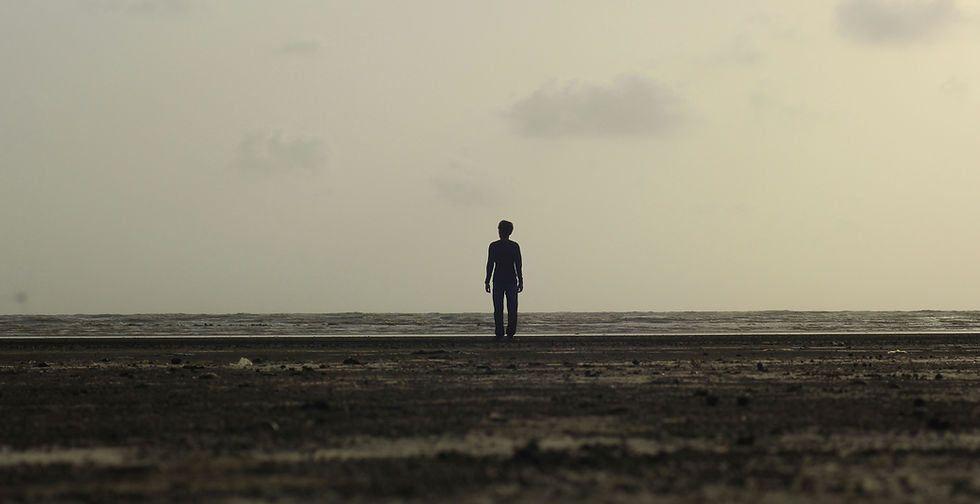
Owning the Fear of failure
- hugodabas

- Nov 7, 2025
- 4 min read
Updated: Nov 9, 2025

Failure is painful, but life wouldn’t have any meaning without it.
When procrastination kicks in, I (like most people) tend to spiral into the meanders of the internet, trying to find anything productive to focus on rather than the actual work. If I happen to learn something new along the way, it’s a bonus.
One day, while searching for articles on Imposter Syndrome to ease my anxiety, I stumbled across a word that immediately hooked my attention: Atychiphobia.
Definition? The fear of failure.
Apart from being a great way to show off at Scrabble, I became obsessed with it. How could such a common, meaningful fear be condensed into such a fun-sounding word?
My mind swirled with questions: how did we end up so afraid of failing? Why is failure still treated like a sin? And, most importantly, is there a way to make it go away once and for all?
So many questions. And even more answers. Because everyone has a personal take on failure.
Failure hurts, but fear costs more
I’ve had my fair share of failures over the years. I’ve lost more football games than I won, got rejected from probably more job applications than I care to admit — and let’s not even talk about the amount of jokes I tried to throw into conversations just to justify my social presence.
Yet none of them hurt as much as the failures I avoided because of fear:
Fear of a new hobby, fear of reaching out for help, fear to be there when needed because I didn’t feel "enough."
I wasn’t afraid to try. I was afraid to fail.
The Nature of Fear
Fear is the most natural feeling of any living being, our best protective instinct. It’s what keeps us safe from harm, and gives us safety. Animals fear predators to survive. As social beings, humans transposed fear into every social habit: fear of being sick, being broke, being alone, and death itself.
Those are understandable fears. They focus on our place in community, and motivate us for constant self-improvement. Be healthy. Work hard. Build strong relationships. Stay alive.
But what happens when those fears stop us from truly living? When the idea of trying something new becomes so overwhelming that we retreat from life altogether?
The burden of not being "enough"
That’s the dark side of our social nature: the need to be the best. Our brains are still wired for the survival-of-the-fittest thinking. If someone else is at the top, that means that we are not. Therefore, we must be a lesser person. Even if we are working hard and have a socially acceptable role in society, social comparison can make us think of ourselves as "not enough."
Social media cranked up this feeling to eleven. We’re constantly bombarded with flattering snapshots of success stories: vacationing on a tropical island, enjoying an exclusive party, celebrating a majestic wedding… Meanwhile, we’re sitting on the toilet, scrolling endlessly with a sense of quiet despair.
We feel that something is wrong with us, that we can never achieve those levels of success. Our obsession makes us blind to the fact that nothing in what our phones show us we see represents the reality of life and its tiny daily struggles. We never share a picture of ourselves clutched to the toilets with food poisoning, or when we’re doing our taxes. Yet those moments define us all. Even internet celebrities have bad days.
Those feelings of underachievement can lead us to stop trying altogether to become a better person. We eventually stop fully engaging in essential tasks and become a shell of ourselves. Because we fear the shame of not achieving what’s expected of us, of not being enough.
We fear to fail.
Our over-connected world has forced us into a NASA-like mindset: our lives must run perfectly, like a rocket mission — and failure is not an option. But without failure, there’s no victory. No growth. No learning path. There’s only fear and regrets.
Learning to reconnect with failure
One of the first self-realization about fear was as a five years old watching the often maligned — and personally beloved — Star Wars Episode I: The Phantom Menace. There’s a scene where Yoda tells the young Anakin Skywalker: "Fear is the path to the dark side. Fear leads to anger. Anger leads to hate. Hate… leads to suffering."
That line is the summary of Anakin’s eventual downfall: He feared not being a strong enough Jedi, faired failing to protect those he loved. Fear feeds on our hopes, our happiness, our sense of purpose… until there’s nothing left.
I don’t claim to be the one who can cure the fear of failure. I’m infected by this virus like anyone else. But I’m learning — slowly, painfully — to accept failure as part of my life. Not as a definition of who I am, but as a learning path. As a challenge to overcome.
I realize now that whatever the outcome, I will have learned something more along the way — and will use this new knowledge to confront failure again, and again.
Maybe fear will always be there. But if we can walk beside it instead of running from it, we can keep moving forward.
If you enjoyed this piece, I share a few quieter thoughts every month in my newsletter — you can join here.