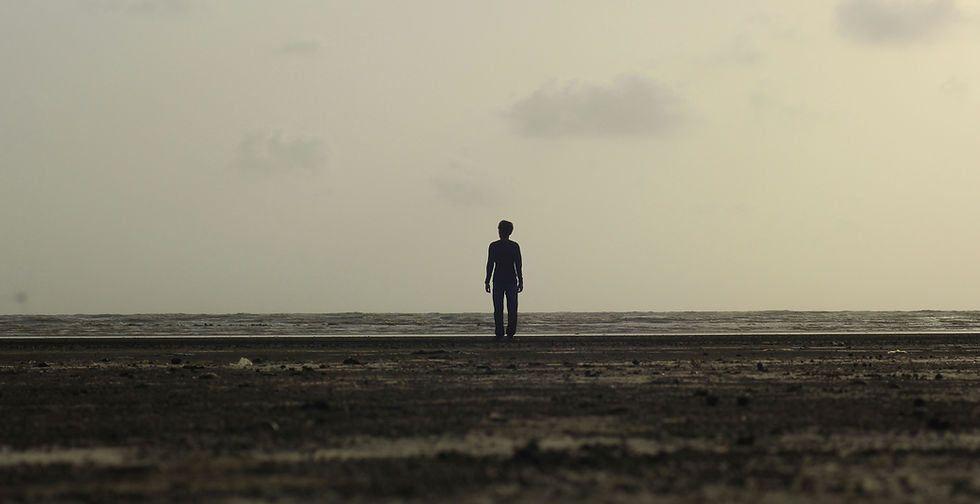
When Rest Feels Like Failure
- hugodabas

- Feb 13
- 6 min read
Updated: Feb 18

I feel tired most of the time, yet I can’t rest properly. Every time I try to stay still, I feel a sense of guilt. But without rest, we can’t function properly.
Picture this: you’ve just finished work. You sent the last email, closed your laptop, got through rush hour, and finally reached home. It’s dark. Cold. Quiet. You want to sit on the couch and take a moment for yourself to recover.
No news. No emails. No messages.
Finally, some time to breathe.
But right as you sit on the couch, a strange feeling starts to appear. Silence sounds suspicious. Closing your eyes looks dangerous. Sleeping feels lazy.
As if slowing down means you’re wasting time.
I know this feeling all too well. For a long time, I equated rest with laziness. If I wasn’t checking off tasks or pushing through deadlines, I felt guilty. My brain seemed wired to see only two options: keep grinding or completely burn out. There was no middle ground. This mindset made rest feel like a failure, a sign that I wasn’t doing enough.
This happened to me no later than last week. I just finished an article, edited it, and made sure it was on the right server for feedback. I shut my laptop, relieved from this assignment, and tried to take a moment to relax.
My body immediately tensed. My jaw clenched. My fingers felt itchy.
And before I realized it, I was on my phone, checking my emails and messages. ‘’One last peek won’t hurt’’, I tell myself.
It’s a lie I’ve rehearsed often enough to believe, and it keeps me wired long after I should’ve stopped.
But work without rest isn’t success; it’s systemic failure. And we need to address it.
Work is Success, Rest is Failure
I can’t remember the last time I woke up completely rested from a night of sleep. I always feel like I barely got half the amount of sleep needed to be functional. As a result, most of my mornings are spent wandering like a sleepwalker. Gulping coffee like it’s water becomes the only way to get through the day.
No time to waste, work is already waiting.
This all-or-nothing thinking is common. Many of us grow up in cultures that praise hustle and productivity, often ignoring the toll it takes on our mental and physical health. When rest is seen as unproductive, it becomes hard to justify. Yet, this mindset leads to exhaustion, stress, and eventually, collapse.
Productivity becomes an identity in itself. Rest becomes a moral failure.
In this equation, rest isn’t freedom. It becomes a panic mode. It leads to stress and self-doubt. And eventually, burnout.
Freelancing makes this struggle even bigger. I’m free from regular office hours now. I can split my time for each gig based on what they need. And yet, I always feel like a fraud if I complete a work sooner than expected. It feels like I don’t value the client’s time as I should. So I double down on the work. I become obsessive about making it right. If I can’t sleep about it, that means I’m doing something right.
And on top of that, we now live in a constant threat of being replaced by machines. Even creative works. Because machines don’t rest. They don’t have office hours. They don’t sleep or eat. They are available, no matter the context. We live in an era of global uncertainty, where we feel powerless and alone.
And the only option we’re left with is to grind harder. An entire industry of hustle culture proliferates online. They try to sell us a gazillion ways to be more productive that could be summed up like this:
"You need to wake up at 5 a.m., work out for 2 hours, and meditate for another before going to work. Repeat after clocking out."
A break too long at lunch and you feel like you're wasting time. If you don’t accept more work, somebody else will, and you’ll be cast aside. Or fired.
Next thing, your entire life runs like the assembly line from Modern Times.
And when we lose our job, it’s like being stripped of our identity. Most job seekers feel tired and depressed. This happens because of constant rejections, few responses, and tough competition in the job market.
I’ve been both a job seeker and a worker, and the former is so much more exhausting. Every morning, I would reach for my phone to check emails. Then, I jumped on the computer when a job alert popped up. Most days, I received the same message: "Unfortunately, we chose another candidate..." Often, it came a dozen times.
You feel guilty because you’re stopped while everyone else is sprinting. You can’t think about resting because you fear you might miss an opportunity. But when this opportunity comes, your body treats it like the trophy instead of the start of the race. You need to rest, but you decide to run on fumes.
Stillness is seen as weakness instead of growth. Rest feels dangerous because we’re forced to give it up.
Even when I rest, I feel the need to be busy. When I watch a movie, take a walk, or read a book, I’m drawn to that little black box in my pocket. One email, one social media check, one brainless piece of content. It is no surprise Netflix demands that characters repeat the plot of films on their platform. Every screen is trying to catch your time, the most important currency ever.
And in the attention economy, sleep is the biggest enemy.
We get the sense that rest must be "earned," not a right.
This isn’t humane. It’s servitude. Servitude to a system that denies our basic rights. Our biological nature.
But it’s time to reclaim it.
Reclaiming Rest as a Right
I thought that grinding myself to exhaustion was the only way to feel productive. If I don’t have a clock to stop me, I can focus on the work without distraction. Right? Turns out that it was another survival mode technique. I subconsciously wanted to keep pushing myself until someone came to say, "You can stop." But nobody did. Only I can step in. Because I’m the only one who understands my system.
Your system can’t make the difference between pushing yourself and being productive. If you’re tired, it wants you to rest. If you can’t rest, you can’t focus; you can’t perform. You can’t be productive.
Rest isn’t laziness. It’s the most natural part of existence. Life cycles are compartmentalized between periods of activity and rest. Our planet is an entire system of work and recovery, rotating between days and nights on a daily basis. Every animal sleeps. Even the most voracious predators. Tigers require between 15 and 18 hours of sleep a day. Would I throw a rock at a wild one and tell them to move more? Certainly not.
Because rest is about safety. Care. Healing. The most creative minds of history understood it all too well. It was an essential part of their creative process. Leonardo Da Vinci was allegedly an adept of the Uberman Sleep Cycle. He would take 20-minute naps every four hours every day. Could he have created the Mona Lisa with such precision if he had spent nights and days working on it?
More of the most brilliant people stick to this practice. Albert Einstein spent more than ten hours a day sleeping, and half of his waking hours were spent walking on campus. That’s the definition of "genius-at-work" to me. And John F. Kennedy was famous for taking one or two-hour naps right after lunch. If the President of the most powerful country in the world could take a moment to recover at the peak of the Cold War, those emails can wait for the next day.
I tried to implement this method in my own way. I’m not an adept of naps, but I know I need time for my mind to wander and recover. Morning is the biggest challenge for me. I try to avoid screens a couple of days a week to avoid screens. Instead, I focus on low-cognitive activities. It could be as simple as walking outside, cleaning my apartment, or reading a book.
By mid-afternoon, I’m usually hit by a spark of creativity. An impulse to get something creative done. But I wouldn’t push or restrain it. I’d break it down into careful steps, starting by opening my laptop. Let the moment happen. Last time, I ended up writing 4 pages of script. It wasn’t a Sorkin-level of writing, but it was done. Words on the page, propelling the story forward. I couldn’t have done it if I forced myself to write from dawn to dusk.
Ingenuity and creativity need time to breathe, recover, and unwind. Inspiration doesn’t come in moments when we chase it. Instead, it sprinkles sparingly when your mind is quiet, ready to absorb new ideas.
Rest is about respecting yourself. Trusting your system to recover. Rest isn’t weakness, it’s our biggest strength.
So next time you slump on the couch and feel the sudden urge to check your emails, tell yourself, "I’ve done enough for today." Without guilt. Without pressure.
And cherish that moment of peace.
If you enjoyed this piece, I share a few quieter thoughts every month in my newsletter — you can join here.