Where Small Business meets Belonging
- hugodabas

- Nov 14, 2025
- 3 min read
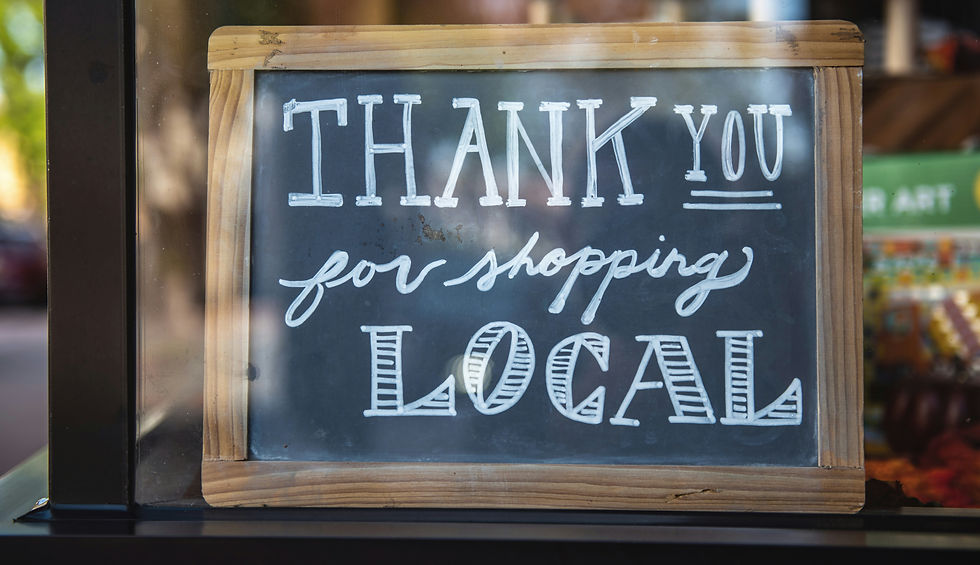
When business feels human, community grows.
We’re living through economic turmoil right now.
The pandemic’s shadow still lingers, prices remain high, and AI reshapes industries, threatening jobs once considered safe. While big corporations merge and expand, many of us feel left on the roadside, watching others speed by on the highway of life.
And yet, our need for community forces us to move forward. People keep creating, adapting, and connecting. In every neighborhood, small businesses remind us what resilience looks like: showing that even when the world feels chaotic and uncertain, local initiative can still build hope, stability, and a sense of belonging.
Small Business, Big Activities
As Big corporations race to become the Weyland-Yutani of our time — and we find comfort in getting access to anything we want with a tap on our phones — it is easy to forget how important small businesses still are in our society.
But here’s the truth: small businesses aren’t the exception. They’re the rule.
Numbers don’t lie: As of 2024, small businesses made up 99% of enterprises in the European Union. That’s 32.3 million businesses employing 77.5 million people. Together, they generate nearly a third of Europe’s total turnover (11.9 trillion € out of 38.3).
Small businesses play a big role in the economy, there’s no question about it. But their strength lies in how their activity impacts society.
Small business is a broad term covering many activities, from local family store to upcoming startups and creative freelancers. Their diversity speak for how they settle in their local communities, offering close services and creating social fabric among them and with their customers.
Anyone who has received a book recommendation from a trusted local bookseller knows it’s worth more than a thousand “you might also like” notifications from a delivery giant. And that feeling of familiarity — of being seen and remembered — is something only small businesses can create.
Just to be clear: Big businesses are not the villain of this story. But for a society to stay innovative and fair, we need healthy competition.
And acknowledge that progress isn’t just about profit, it’s about people.
Going back to the pandemic, when a majority of us were stuck at home and isolation weighted heavy, many small businesses persevered in continuing to serve us despite health restrictions — from growing their online presence to offering alternatives services better adapted to people’s needs while trying to keep everyone safe.
This will to outreach beyond their initial abilities not only shows great adaptation strength to keep their activity afloat, but a resilience to keep serving their community.
Business meets community
Small businesses can be our quiet anchors. They’re our neighbors, our kids’ teammates’ parents, our local artists and volunteers. And when they choose to look beyond the profit sheet — when they decide to reinvest in the same streets and people who sustain them — something powerful happens: business turns back into community.
A small business has the unique ability to grow with the people around it. They can sponsor local teams, host community events, collaborate with charities, and create partnerships that keep talent and creativity circulating close to home. When they thrive, they don’t just scale numbers —they scale relationships.
Many entrepreneurs are starting to recognize this: that their role isn’t just economic, but social. That their shop, café, or start-up can be a place where inclusivity, sustainability, and collaboration take root.
Because small business and social growth can be inseparable when people choose to build them that way.
Small Businesses, Big Stories to Tell
In times like these, stories of social impact matter more than ever.
Small businesses don’t just sell, they connect. Every new venture, every handmade product, every late-night idea that turns into a morning routine carries a story worth telling.
Because storytelling isn’t just marketing, it’s memory. It’s how a local café becomes the place where someone met their best friend, or how a craftsman’s workbench becomes a symbol of patience and pride. These are the stories that remind people why small still matters.
And that’s what I want to help bring to light.
Not slogans or quick content. Just the words that show what makes your work human, relatable, and true.
Because when your story resonates, your community doesn’t just remember your name.
They root for you.
If you enjoyed this piece, I share a few quieter thoughts every month in my newsletter — you can join here.


