Writing in the age of AI
- hugodabas

- Oct 7, 2025
- 3 min read
Updated: Mar 17
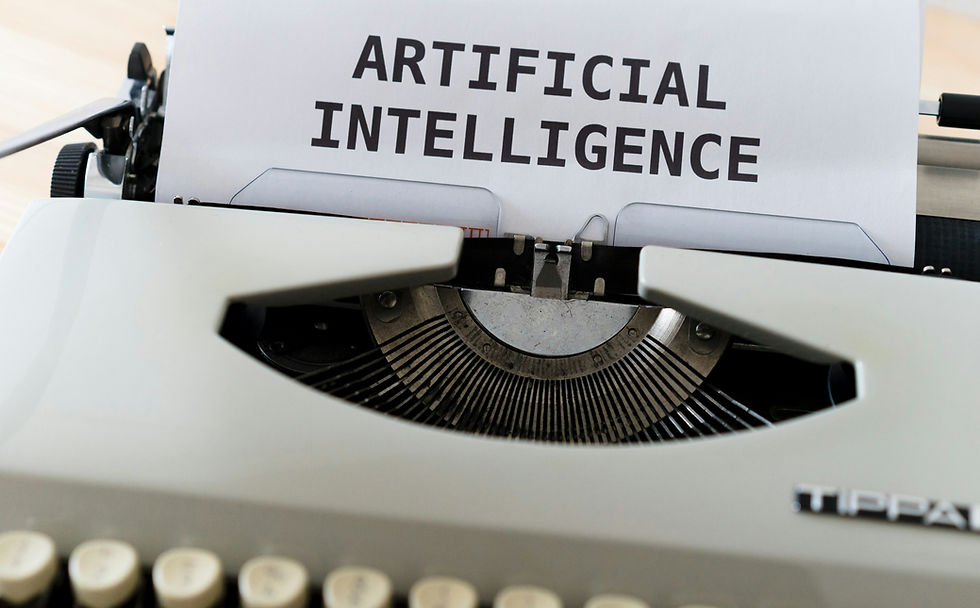
AI seems to be inevitable... for now
Companies throw billions into the latest tech race, chasing the tiniest edge over competitors to boost their shares. Governments bend over backwards to welcome those investments, even if they are detrimental to local populations' energy needs and to the fight against climate change.
In the meantime, the general public is offered a wide range of new gadgets to try: smart home automation, autonomous vehicles, fitness trackers...
And of course, generating content.
Once hailed as a promise of humanity finally being done with intense and painful labor, Artificial Intelligence is now widely adopted as a tool to create what made us unique: drawings, paintings, graphic illustrations, videos, and now even films and novels.
Granted, its use hasn’t been widely normalized yet. The double strike of the Writers and Screen Actors Guilds of 2023 managed to prevent the big Hollywood studios from having free rein in using artificial intelligence tools to write their scripts and to use an actor’s likeness ad vitam eternam. But now that Silicon Valley walks hand in hand with the creative industry, the use of AI will not stop being pushed.
My take on AI writing
Now, let’s be honest and straightforward: have I ever asked AI to write a text for me (just for fun, never professionally)? Of course! My sub-zero self-esteem simply couldn’t let me live without knowing if it could create something so good it would destroy my budding career.
Was it good? If you're looking for a checklist of every possible buzzword and sentence meant to impress Google’s algorithm… sure.
Did it move me? Not at all. The text felt like a jumble of words shoved together at lightning speed, with no regard for intention or meaning. And that’s exactly how AI works
To quote the legendary filmmaker and writer Werner Herzog: “There are stories, but they have no soul. They are empty and soulless.”
Writing is about connection, not content
Think of AI writing as junk food: quick, cheap, and full of harmful nutrients that your brain craves for a dopamine hit. But after reading it, you’re left with a strange feeling: you’re not satiated. In fact, you feel bloated and unsatisfied
If AI content is junk food, human writing is a homemade meal
Now, think of your favorite novel. You remember words and sentences that hooked you and made you want to keep turning the pages. You wanted to find out how Phileas Fogg could travel around the world in 80 days, or if Elizabeth Bennett would end up with Mr. Darcy. Those stories moved you because the writers took the time to craft a compelling narrative, with interesting characters, all while challenging expectations of storytelling
If AI content is junk food, human writing is a homemade meal: thoughtfully planned, carefully prepared, and served with pride. When shared, it creates moments people remember, moments that feel personal and meaningful.
In an age of constant, rapid attention shifts, you have two options for spreading your message: follow the trend and flood the web with generic, empty content... or create something that will make someone pause their doomscrolling and feel a genuine connection to your story
If you want words that resonate instead of just filling space, that’s the kind of story I’m ready to craft with you.
If you enjoyed this piece, I share a few quieter thoughts every month in my newsletter — you can join here.


